

Leading Through Tariffs: A Lifestyle CEO’s Perspective
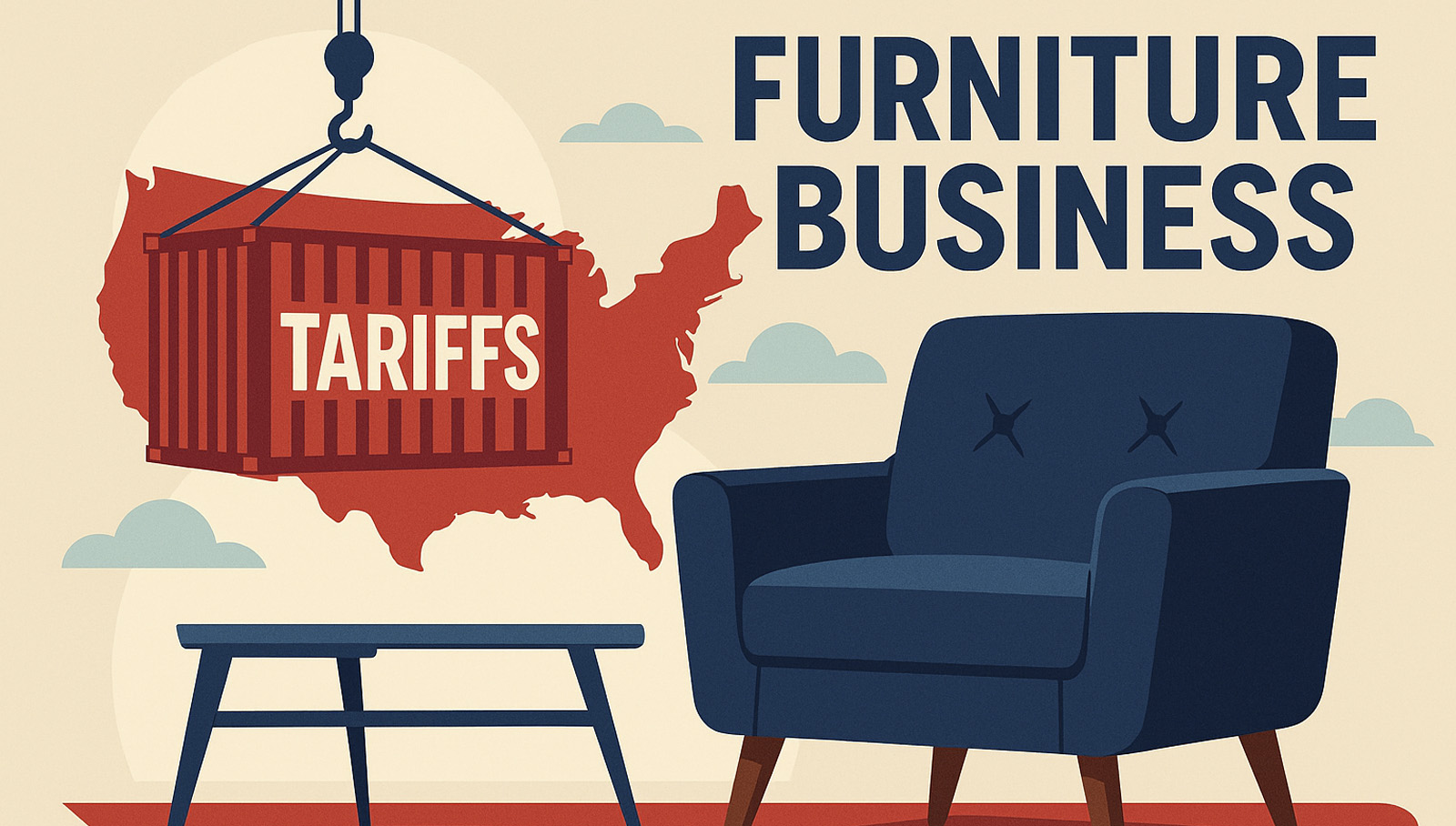
When people think about the furniture business, they imagine sofas, dining sets, or maybe the latest ergonomic office chair. But from where I sit—as someone who leads a company in this space—our reality is shaped as much by international trade policy as it is by design trends or customer preferences.
Tariffs are not abstract policy for us; they are daily realities. A shift in tariffs can change the cost of an entire shipment overnight, and with it, the pricing strategy of a whole product line. If you’ve ever wondered why the dining table you had your eye on suddenly costs a few hundred dollars more, chances are tariffs had something to do with it.
The Challenge of Tariffs
Over the past decade, US furniture companies have relied heavily on imports, particularly from Asia. China, Vietnam, Malaysia, and Indonesia have all been important players in supplying affordable, mass-produced furniture that fits American homes.
When tariffs are imposed on these imports, the effect is immediate: costs rise, margins shrink, and companies are forced to make difficult decisions. Do we raise prices and risk losing price-sensitive customers? Do we absorb the cost and hope to make it up in volume? Or do we rethink our supply chain altogether?
For me, this isn’t just about numbers on a spreadsheet. It’s about aligning our business decisions with the lifestyle we’re promising our customers. Furniture is about more than utility—it’s about creating spaces where families gather, friends connect, and lives unfold. Every tariff forces us to ask: how do we keep delivering that promise without compromise?
Turning Disruption Into Opportunity
The beauty of challenges is that they spark innovation. Tariffs, while disruptive, have pushed many of us in the industry to explore new horizons:
1. Domestic Manufacturing
Instead of relying entirely on imports, some companies are investing in US-based production. This creates jobs, shortens supply chains, and allows for customization. Yes, costs are higher, but customers increasingly value products with a “Made in America” story.
2. Diversified Supply Chains
Instead of depending on one country, we’re now looking to diversify—sourcing from multiple regions to balance costs and reduce risk. Tariffs, in a way, have forced us to become more resilient.
3. Sustainability as Strategy
Higher import costs also encourage us to look inward—to source local wood, fabrics, and materials. In doing so, we align with growing consumer demand for sustainable, eco-conscious furniture. What once was a marketing advantage is becoming a necessity.
4. Lifestyle Storytelling
Tariffs may drive up costs, but they also give us the opportunity to shift the narrative. Customers don’t just want furniture; they want lifestyle. When we explain that their new sofa isn’t just more expensive but is part of a sustainable, locally made movement, the value becomes clearer.
Highlights at a Glance
| Core challenge | Tariffs reshape pricing, margins, and supply chains across the furniture industry. |
| Strategic response | Investing in domestic manufacturing, diversifying sourcing, and building resilience. |
| Customer promise | Delivering lifestyle, not just products—spaces where people live, connect, and grow. |
| Long-term view | Seeing tariffs as catalysts for innovation, intentional growth, and deeper brand meaning. |
The Lifestyle CEO Mindset
As a lifestyle CEO, I don’t just see furniture as products—we are curators of experiences. When tariffs shake up the business, I choose to see it not as a setback, but as a reminder: our mission isn’t only to deliver affordable products, it’s to deliver meaningful living.
The truth is, people are willing to invest in pieces that last, that carry a story, that add richness to their daily lives. Tariffs may change the economics, but they can’t change that truth. They simply push us to refine how we deliver on it.
So, when I look at the landscape, I see tariffs as part of a larger journey. They’re signals to slow down in some areas, accelerate in others, and, above all, remain intentional. Because in the end, furniture isn’t just about filling a room—it’s about shaping the way people live, connect, and grow.
Looking Ahead
The furniture industry in the US will continue to evolve. Tariffs will rise and fall, trade alliances will shift, and supply chains will adapt. But what will remain constant is the essence of our work: creating spaces that feel like home.
To me, being a CEO in this space isn’t about surviving tariffs—it’s about thriving despite them. It’s about leading with vision, staying rooted in values, and remembering that at the end of the day, every sofa, every table, every chair we sell becomes part of someone’s life story.
And that’s a responsibility—and privilege—that no tariff can ever change.

When people think about the furniture business, they imagine sofas, dining sets, or maybe the latest ergonomic office chair. But from where I sit—as someone who leads a company in this space—our reality is shaped as much by international trade policy as it is by design trends or customer preferences.
Tariffs are not abstract policy for us; they are daily realities. A shift in tariffs can change the cost of an entire shipment overnight, and with it, the pricing strategy of a whole product line. If you’ve ever wondered why the dining table you had your eye on suddenly costs a few hundred dollars more, chances are tariffs had something to do with it.
The Challenge of Tariffs
Over the past decade, US furniture companies have relied heavily on imports, particularly from Asia. China, Vietnam, Malaysia, and Indonesia have all been important players in supplying affordable, mass-produced furniture that fits American homes.
When tariffs are imposed on these imports, the effect is immediate: costs rise, margins shrink, and companies are forced to make difficult decisions. Do we raise prices and risk losing price-sensitive customers? Do we absorb the cost and hope to make it up in volume? Or do we rethink our supply chain altogether?
For me, this isn’t just about numbers on a spreadsheet. It’s about aligning our business decisions with the lifestyle we’re promising our customers. Furniture is about more than utility—it’s about creating spaces where families gather, friends connect, and lives unfold. Every tariff forces us to ask: how do we keep delivering that promise without compromise?
Turning Disruption Into Opportunity
The beauty of challenges is that they spark innovation. Tariffs, while disruptive, have pushed many of us in the industry to explore new horizons:
Domestic Manufacturing
Instead of relying entirely on imports, some companies are investing in US-based production. This creates jobs, shortens supply chains, and allows for customization. Yes, costs are higher, but customers increasingly value products with a “Made in America” story.Diversified Supply Chains
Instead of depending on one country, we’re now looking to diversify—sourcing from multiple regions to balance costs and reduce risk. Tariffs, in a way, have forced us to become more resilient.Sustainability as Strategy
Higher import costs also encourage us to look inward—to source local wood, fabrics, and materials. In doing so, we align with growing consumer demand for sustainable, eco-conscious furniture. What once was a marketing advantage is becoming a necessity.Lifestyle Storytelling
Tariffs may drive up costs, but they also give us the opportunity to shift the narrative. Customers don’t just want furniture; they want lifestyle. When we explain that their new sofa isn’t just more expensive but is part of a sustainable, locally made movement, the value becomes clearer.
The Lifestyle CEO Mindset
As a lifestyle CEO, I don’t just see furniture as products—we are curators of experiences. When tariffs shake up the business, I choose to see it not as a setback, but as a reminder: our mission isn’t only to deliver affordable products, it’s to deliver meaningful living.
The truth is, people are willing to invest in pieces that last, that carry a story, that add richness to their daily lives. Tariffs may change the economics, but they can’t change that truth. They simply push us to refine how we deliver on it.
So, when I look at the landscape, I see tariffs as part of a larger journey. They’re signals to slow down in some areas, accelerate in others, and, above all, remain intentional. Because in the end, furniture isn’t just about filling a room—it’s about shaping the way people live, connect, and grow.
Looking Ahead
The furniture industry in the US will continue to evolve. Tariffs will rise and fall, trade alliances will shift, and supply chains will adapt. But what will remain constant is the essence of our work: creating spaces that feel like home.
To me, being a CEO in this space isn’t about surviving tariffs—it’s about thriving despite them. It’s about leading with vision, staying rooted in values, and remembering that at the end of the day, every sofa, every table, every chair we sell becomes part of someone’s life story.
And that’s a responsibility—and privilege—that no tariff can ever change.