Wholesale Bedroom Furniture Supplier Guide: How Retailers Should Evaluate and Choose a Partner
Key Takeaway
Choosing a wholesale bedroom furniture supplier is a sourcing decision, not just a purchase. Retailers should look past unit price and evaluate category depth, materials and case construction, finish consistency across coordinated pieces, price architecture, minimum orders and container planning, inventory visibility and lead times, and dealer support. The strongest supplier helps a retailer build a complete, profitable bedroom program while reducing operational and delivery risk.
Bedroom is one of the highest-value departments on a furniture retail floor. A single sale can move a bed, dresser, mirror, chest and two nightstands together, which makes the bedroom category a powerful driver of average ticket and attachment sales. However, that only works when the supplier behind the collection can deliver consistent quality, coordinated finishes and reliable supply.
Two bedroom collections that look identical in a catalog can perform very differently once they reach the warehouse, showroom and customer's home. For dealers and retailers, choosing a wholesale bedroom furniture supplier is therefore about matching product, price and supply capability to the way the store actually sells.
This guide explains how retailers should evaluate bedroom furniture suppliers and manufacturers, what separates the two, and which questions to ask before committing floor space, inventory and working capital.
At a Glance: 7 Areas Retailers Should Evaluate
| 01 | Category depth — complete bedroom groups, not just hero beds |
| 02 | Materials — solid wood, veneers, engineered panels, laminates and hardware |
| 03 | Case construction — drawer systems, bed systems, joinery and stability |
| 04 | Finish consistency — color, sheen and tone matched across the full group |
| 05 | Price architecture — good, better and best steps that are visibly different |
| 06 | Supply capability — minimums, container planning, inventory and lead times |
| 07 | Dealer support — order visibility, claims handling, parts and a real contact |
Wholesale Bedroom Furniture Sourcing: What Retailers Should Evaluate
Effective wholesale bedroom furniture sourcing requires retailers to weigh more than the price of a bed. Materials, case construction, finish matching, minimum orders, logistics and after-sales support all affect showroom performance, delivery efficiency and repeat business. The supplier that offers the lowest opening price is not always the one that delivers the strongest bedroom program.
Bedroom is also a category with real resilience for retailers who source it well. Furniture Today's analysis of how the bedroom category performs in a tough business climate highlights how value, construction integrity and added features drive sell-through — reinforcing why supplier selection, not just price, shapes results on the retail floor.
Supplier vs Manufacturer: What Bedroom Retailers Should Know
A wholesale bedroom furniture supplier sources, develops, consolidates, inventories, markets and supports products for retailers — often across a network of factories. A bedroom furniture manufacturer produces furniture in its own facility or dedicated production line. Some companies do both, but for most retail buyers the day-to-day partner is a supplier who coordinates the making rather than owning every factory.
The label matters less than the responsibilities the company can actually manage. A capable supplier handles product development, factory coordination, quality control, container planning, domestic inventory, product information and claims — not just the physical making of a dresser. That breadth is usually more valuable to a retailer than the factory floor itself.
Before committing, confirm who controls product specifications, who approves production samples, who manages quality issues and who remains accountable after the container ships.
Category Depth: Evaluate the Whole Bedroom, Not Just the Bed
Bedroom is sold as a room story. A striking bed does little for a retailer's margin if the supporting case pieces are weak, out of stock or finished inconsistently. Attachment sales — the dresser, mirror, chest and nightstands added to the bed — are where the bedroom category earns its floor space.
What a Complete Bedroom Group Should Include
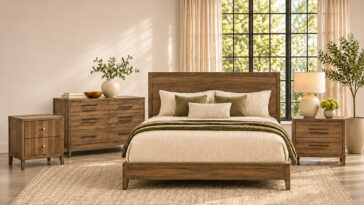
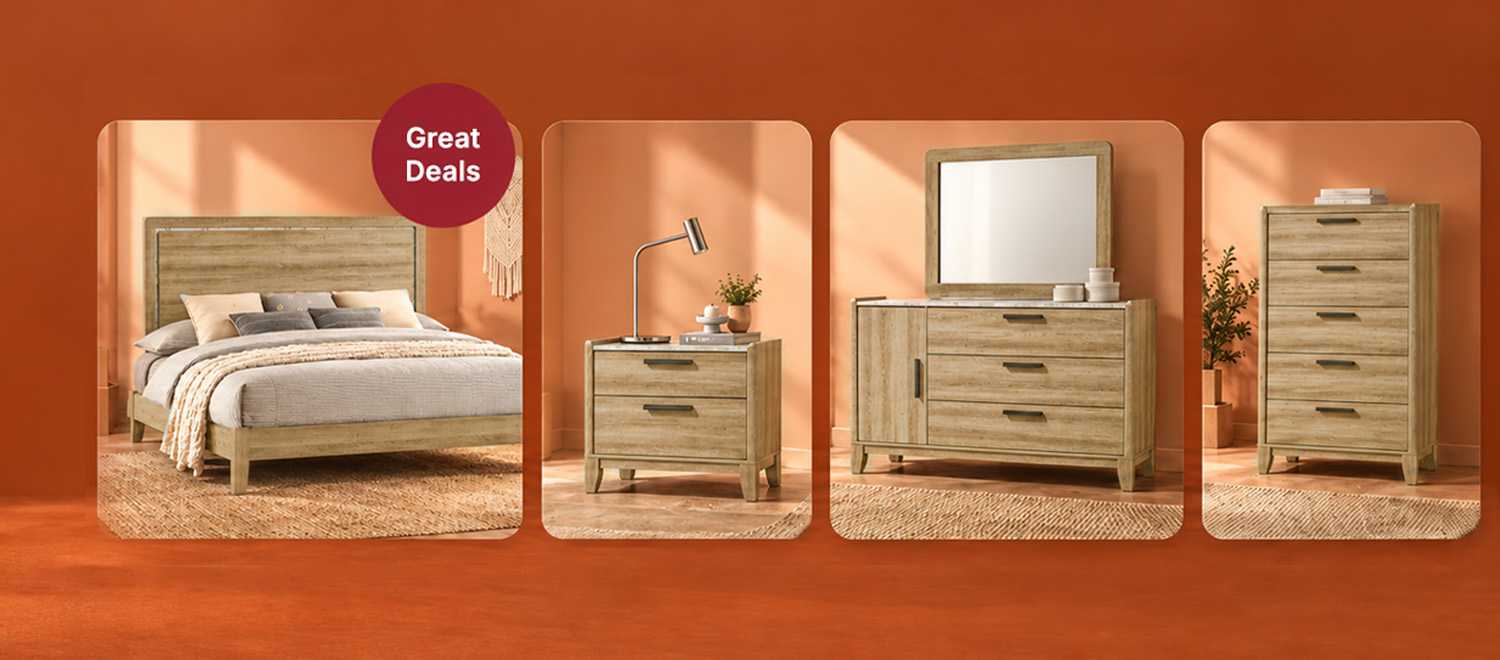
A commercially viable bedroom collection usually spans beds and headboards, nightstands, dressers, mirrors, chests and coordinated storage pieces. Retailers should confirm that every supporting piece is available, stocked on a sensible replenishment logic and finished to match — not just the photographed hero bed.
Explore Lifestyle Bedroom Sets →Bedroom Materials: What Retail Buyers Should Understand
No single material is automatically right for every bedroom program. A well-built engineered-panel product may suit a value-focused, flat-pack assortment, while solid wood or real-wood veneer may better support a higher ticket and a premium merchandising story. The key is knowing where each material is used and whether the construction matches the promised price point.
Bedroom Material Comparison for Retail Buyers
| Material | Potential Advantages | Questions to Ask |
| Solid wood | Natural grain, repairability and a strong premium material story | Which components are solid wood? How is movement from humidity managed? |
| Wood veneer | Real-wood appearance over a more stable panel core | What is the core material? How are veneer matching and edges handled? |
| MDF / engineered wood | Consistency, smooth surfaces, dimensional stability and cost control | Where is it used? What are the density, thickness and fastening methods? |
| Laminate / melamine | Consistent appearance, practical surfaces and value positioning | How are exposed edges finished? Is the surface right for the intended use? |
| Metal & hardware | Drawer glides, connectors, bed-rail hardware and functional detail | Are glides, connectors and fasteners replaceable and consistently specified? |
Case Construction: How Bedroom Furniture Really Performs
Materials tell only part of the story. Construction determines how a bedroom group survives shipping, assembly and years of daily use. Drawers are opened thousands of times; beds carry real load; mirrors must mount safely. Retail buyers should inspect hidden areas, not just front-facing photography.
Bedroom Construction Details to Review
- Drawer boxes: panel thickness, corner joinery, bottoms and resistance to racking.
- Drawer glides: type, smoothness, extension, stop function and replacement availability.
- Bed systems: rail connections, center support, slats, leg support and hardware access.
- Case stability: back-panel attachment, anti-tip provisions and load-bearing areas.
- Mirror mounting: bracket design, fixings and safe attachment to the dresser.
- Hardware: knobs, pulls and connectors specified consistently across the group.
- Knock-down pieces: connector strength, assembly sequence and labelled parts.
- Contact points: floor protection, levelers and areas prone to repeated impact.
A good supplier can explain why a construction method was chosen for a given price and use case. The goal is not the most expensive construction in every piece — it is construction that is appropriately engineered for the target customer, the shipment method and expected use.
Finish Consistency Across the Bedroom Group
Because bedroom is merchandised as a coordinated set, finish consistency is critical. Small variation may be acceptable in natural wood, but a visible mismatch between the bed, dresser and nightstand weakens the coordinated presentation customers are paying for — and creates claims risk after delivery.
Retailers should review color standards, sheen, distressing, grain direction, edge treatment and hardware tone across the full collection, and compare production samples rather than a single prototype or digital render where possible.
Price Architecture: Building a Profitable Bedroom Assortment
A broad catalog does not automatically create a productive assortment. Buyers should plan the bedroom range around customer demand, showroom capacity and clear price steps, so shoppers can trade up and staff can sell with confidence.
Bedroom Assortment Planning Principles
- Create clear price steps: good, better and best groups that differ visibly in material, scale, storage or finish.
- Select hero beds: lead with statement beds that anchor a room presentation.
- Protect attachment sales: ensure nightstands, dressers, mirrors and chests are commercially viable and in stock.
- Balance fashion and continuity: combine trend-forward finishes with dependable core programs.
- Plan for floor space: choose groups that tell a complete story without displaying every SKU.
- Check replenishment logic: know which pieces are stocked, made to order or on longer lead times.
Retailers should also calculate the complete landed and operating impact of a collection — freight, cube utilization, assembly labor, delivery complexity, damage risk and the likelihood of selling multiple pieces together — not just the opening unit cost.
Supply Capability, Inventory and Lead Times
For bedroom especially, supply reliability is part of the product. If the dresser is out of stock when the bed sells, the retailer loses the attachment sale and risks a canceled order. Buyers should understand opening-order and container requirements, which pieces are held in domestic inventory, expected lead times and how the supplier communicates delays, discontinued finishes and packaging changes.
A resilient sourcing network matters here too. Suppliers that produce across more than one country or region can better absorb disruption, protect availability and hold pricing steadier through changing trade conditions.
Dealer Support: What Happens After the Order Ships
The quality of a bedroom program is judged partly by what happens when something goes wrong. Retailers should confirm how the supplier documents and resolves damage claims, whether replacement hardware and service parts are available for current programs, and who the retailer's actual contact is for ordering, logistics and after-sales support.
Bedroom Supplier Evaluation Checklist
| 01 | How complete is the bedroom group — beds, storage, mirrors, nightstands and chests? |
| 02 | Which components are solid wood, veneered, engineered wood, laminate or metal? |
| 03 | How are drawer and bed-system construction standards and samples approved? |
| 04 | How is finish consistency controlled across a coordinated bedroom collection? |
| 05 | What are the opening-order, SKU, shipment or container requirements? |
| 06 | Which pieces are held in inventory, and what lead-time visibility is available? |
| 07 | How resilient is the sourcing network across factories and countries? |
| 08 | What product specifications, photography and assembly documents are provided? |
| 09 | How are damages, missing hardware and replacement parts handled? |
| 10 | Who is the retailer's contact for ordering, logistics and after-sales support? |
Why Retailers Source Bedroom Furniture Through Lifestyle
Lifestyle is a global B2B furniture partner supplying retailers, dealers and e-commerce furniture businesses. Its bedroom offering sits within a whole-home range that also spans dining, casegoods, upholstery and motion — allowing retailers to coordinate styles, price points and shipment planning across departments rather than evaluating bedroom in isolation.
Retailers can review Lifestyle's wholesale bedroom furniture supplier capabilities, explore coordinated bedroom sets and related casegoods categories, and speak with the team about dealer programs, volume purchasing and sourcing requirements.
Bedroom & Whole-Home Sourcing for Dealers
Review Lifestyle's bedroom, casegoods and dining categories, consider the mixable whole-home program, or visit the High Point showroom to evaluate collections and finishes in person.
Total Home Mixable Program → Visit Our Showrooms →Looking for a Wholesale Bedroom Furniture Supplier?
Connect with Lifestyle to explore bedroom collections, dealer programs and sourcing options for your retail business.
Become a Lifestyle Dealer Contact the Lifestyle TeamFrequently Asked Questions
What is a wholesale bedroom furniture supplier?
What is the difference between a bedroom furniture supplier and a manufacturer?
What should retailers evaluate when choosing a bedroom furniture supplier?
What materials are used in wholesale bedroom furniture?
Why does finish consistency matter in bedroom furniture?
Why is inventory visibility important when sourcing bedroom furniture?
Does Lifestyle supply bedroom furniture to US retailers and dealers?
Sources and Related Resources
Lifestyle Wholesale Bedroom Furniture Supplier · Lifestyle Bedroom Sets · Lifestyle Casegoods Furniture Supplier · How to Choose a Wholesale Furniture Supplier · Lifestyle Total Home Program · Lifestyle Dealer Registration · Furniture Today: How Bedroom Performs in a Tough Climate