Casegoods Furniture Sourcing Guide for Retailers: Materials, Construction and Supplier Selection
Key Takeaway
For furniture retailers, successful casegoods sourcing depends on more than appearance and unit price. Buyers should compare materials, construction, finish consistency, packaging, order flexibility, logistics and after-sales support. The strongest casegoods supplier is one that can help a retailer build a coordinated assortment at the right price points while reducing operational risk.
Casegoods furniture plays a central role in bedroom, dining and occasional furniture departments. These products create coordinated room stories, support add-on sales and give retailers multiple price points within the same category. However, two casegoods collections that look similar online can perform very differently once they reach the showroom, warehouse or customer's home.
For dealers and retailers, the sourcing decision should therefore go beyond style. Materials, drawer construction, hardware, finish consistency, packaging, assembly requirements and supplier support all affect the final retail experience.
This guide explains how to evaluate casegoods furniture and how to compare a casegoods manufacturer or supplier before committing floor space, inventory and working capital.
At a Glance: 7 Areas Retailers Should Evaluate
| 01 | Product fit — categories, styles and price points that match the retailer's customers |
| 02 | Materials — solid wood, veneers, engineered wood, laminates and hardware |
| 03 | Construction — drawer systems, joinery, stability, assembly and load-bearing areas |
| 04 | Finish consistency — color matching, surface quality and coordinated collections |
| 05 | Packaging — carton protection, hardware kits, instructions and damage prevention |
| 06 | Commercial terms — minimums, lead times, inventory and mixed-category options |
| 07 | Dealer support — product information, claims handling, parts and order visibility |
Casegoods Furniture Sourcing: What Retailers Should Evaluate
Effective casegoods furniture sourcing requires retailers to evaluate more than product appearance and wholesale cost. Materials, construction, finish consistency, packaging, logistics and supplier support can all affect showroom performance, delivery efficiency and customer satisfaction.
What Is Casegoods Furniture?
Casegoods furniture generally refers to non-upholstered furniture built around a hard structure, surface or storage case. The term includes products such as beds, dressers, nightstands, chests, dining tables, cabinets, occasional tables and entertainment or storage pieces.
Both spellings—casegoods and case goods—are widely used in the furniture industry. Retailers may also see the term used more narrowly for bedroom and dining furniture, or more broadly for most non-upholstered home furniture.
The practical difference from upholstery is straightforward: upholstery is primarily evaluated through frames, cushioning, fabrics, mechanisms and seating comfort, while casegoods require closer attention to panels, veneers, joints, hardware, finishes, drawers, doors and assembly.
Common Casegoods Categories for Furniture Retailers
A casegoods assortment can cover several rooms and buying occasions. The right category mix depends on the retailer's floor space, target customer, delivery model and preferred price architecture.
Bedroom Sets and Storage
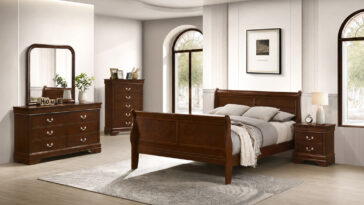
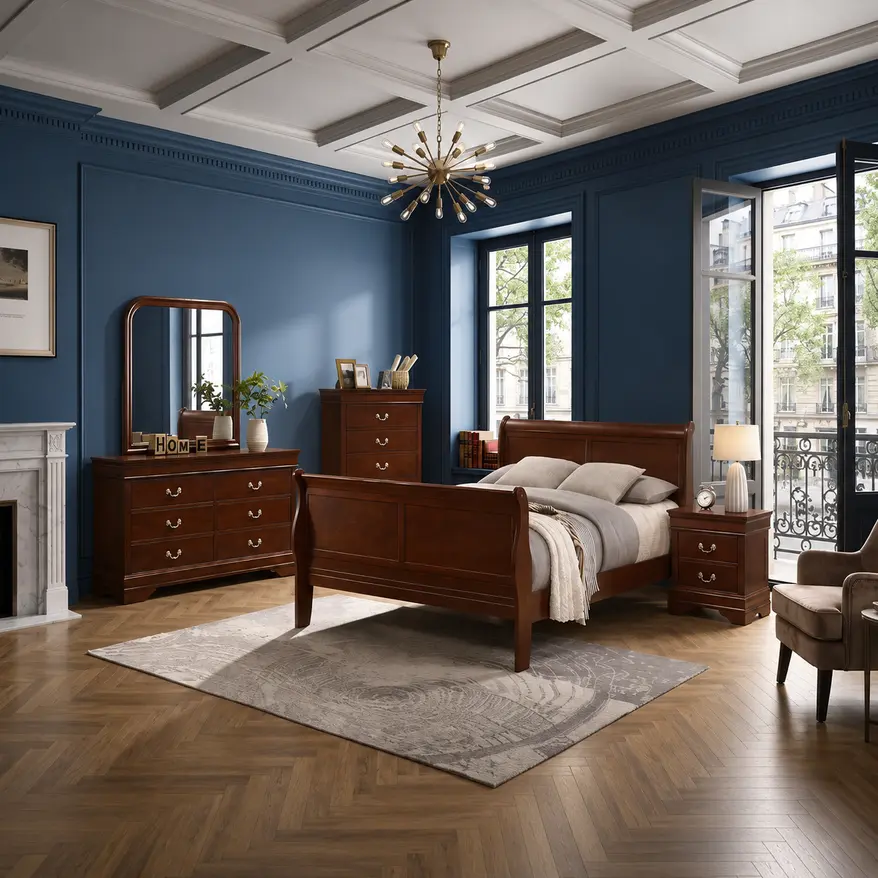
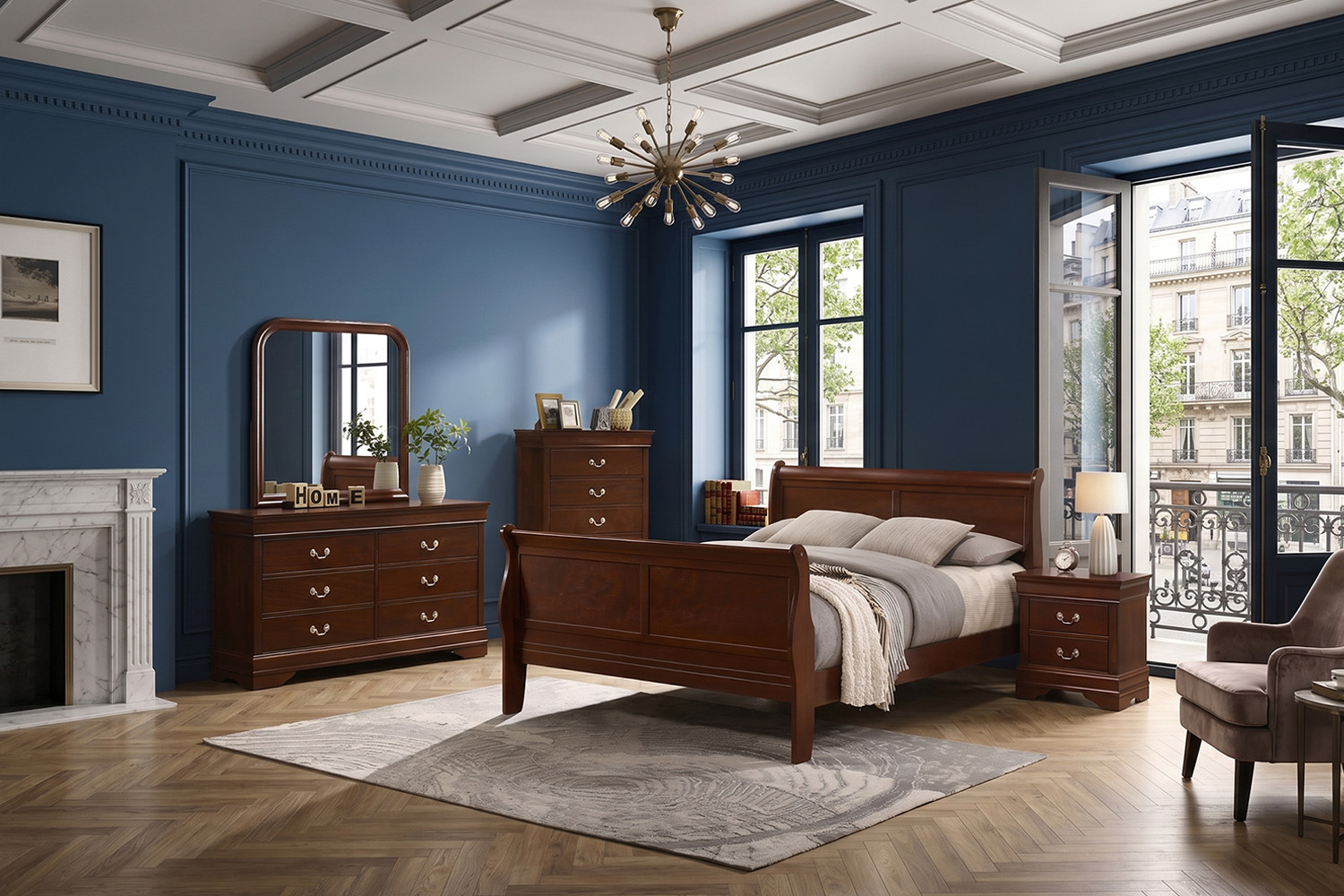
Common bedroom casegoods include beds, headboards, nightstands, dressers, mirrors, chests and coordinated storage pieces. Retailers should compare the complete collection—not only the bed—because attachment sales often depend on the strength of the supporting pieces.
Explore Lifestyle Bedroom Sets →Dining Tables, Chairs and Storage
Dining casegoods may include fixed or extendable tables, chairs, benches, servers, buffets and cabinets. Buyers should consider table construction, chair stability, finish matching and whether the collection offers enough configurations for different household sizes.
Explore Lifestyle Dining Sets →Occasional Tables, Bunk Beds and Space-Saving Furniture
Coffee tables, end tables, storage pieces, bunk beds and Murphy chest beds can broaden a retailer's casegoods mix. These items often require additional attention to assembly instructions, hardware completeness, safety-related components and replacement-part support.
Explore Bunk Beds → Explore Murphy Chest Beds →Casegoods Materials: What Retail Buyers Should Understand
No single material is automatically the best choice for every retail program. A well-built engineered-wood product may be more appropriate for a value-focused, flat-pack program, while solid wood or real-wood veneer may better support a higher ticket and a different merchandising story.
Material innovation in casegoods extends beyond traditional solid wood. Furniture Today’s review of non-wood material trends in casegoods examines how engineered materials, hybrid construction and improved surface technologies are helping suppliers balance design, durability and retail value.
The key is to understand where each material is used, how it contributes to performance and whether the construction matches the promised retail price point.
Material Comparison for Retail Buyers
| Material | Potential Advantages | Questions to Ask |
| Solid wood | Natural grain, repairability and a strong material story | Which components are solid wood? How is movement from humidity addressed? |
| Wood veneer | Real-wood appearance over a more stable panel core | What is the core material? How are veneer matching and edge details handled? |
| MDF or engineered wood | Consistency, smooth surfaces, dimensional stability and cost control | Where is it used? What are the density, thickness and fastening methods? |
| Laminate or melamine | Consistent appearance, practical surface performance and value positioning | How are exposed edges finished? Is the surface suitable for the intended use? |
| Metal and hardware | Structural support, movement and functional detail | Are glides, hinges, connectors and fasteners replaceable and consistently specified? |
How Construction Affects Quality and Retail Value
Materials tell only part of the story. Construction determines how those materials perform together during shipping, assembly and daily use. Retail buyers should evaluate visible and hidden areas rather than relying only on front-facing photography.
Construction Details to Review
- Drawer boxes: panel thickness, corner construction, bottoms and resistance to racking.
- Drawer glides: type, smoothness, extension, stop function and replacement availability.
- Door alignment: hinge adjustment, gaps and consistency across production units.
- Back panels: attachment method and whether the back contributes to structural stability.
- Bed systems: rail connections, support systems, slats, center supports and hardware access.
- Dining tables: apron construction, leg attachment and extension-leaf operation where applicable.
- Knock-down furniture: connector strength, assembly sequence, labelled parts and repeat assembly risk.
- Contact points: floor protection, leveling devices and areas likely to receive repeated impact.
A supplier should be able to explain why a construction method was selected for a particular retail price and use case. The goal is not to demand the most expensive construction in every item. The goal is to confirm that the product is appropriately engineered for its intended customer, shipment method and expected use.
Finish Consistency and Coordinated Merchandising
Casegoods are often sold as room groups, which makes finish consistency especially important. A small variation may be acceptable in natural materials, but visible differences between a bed, dresser and nightstand can weaken the coordinated presentation customers expect.
Retailers should review color standards, sheen, distressing, grain direction, edge treatment and hardware tone across the full collection. When possible, compare production samples rather than relying only on digital renders or a single prototype.
Packaging, Shipping and Assembly Considerations
Casegoods can be vulnerable to corner damage, surface abrasion, hardware loss and movement inside the carton. Packaging quality therefore affects more than the condition of the product—it also affects warehouse handling, delivery scheduling, assembly time, claims and customer satisfaction.
Retailers should ask how cartons are tested, how corners and finished surfaces are protected, how hardware is secured and how replacement parts are identified. For ready-to-assemble or knock-down products, the quality of the instruction sheet and hardware labelling can be as important as the product design itself.
Packaging and Logistics Questions
| 01 | Are fragile corners, edges and finished surfaces protected against movement and abrasion? |
| 02 | Are hardware kits secured, labelled and matched to clear assembly instructions? |
| 03 | Can the supplier provide carton dimensions, weights and cube information for planning? |
| 04 | How are damage claims documented, reviewed and resolved? |
| 05 | Are replacement hardware and service parts available for current programs? |
| 06 | How are product changes, discontinued finishes and packaging revisions communicated? |
Casegoods Manufacturer vs Supplier: What Is the Difference?
A casegoods manufacturer produces furniture in its own facility or production network. A casegoods supplier may manufacture, source, consolidate, inventory, market and support products for retailers. Some companies perform both roles.
For a retail buyer, the more important question is not the label—it is which responsibilities the company can manage effectively. A supplier relationship may involve product development, factory coordination, quality control, container planning, domestic support, product information and claims handling.
Before selecting a casegoods furniture manufacturer or supplier, confirm who controls product specifications, who approves production samples, who manages quality issues and who remains accountable after the order ships.
How to Build a More Profitable Casegoods Assortment
A broad catalog does not automatically create a productive retail assortment. Buyers should plan the range around customer demand, showroom capacity, price points and attachment opportunities.
Assortment Planning Principles
- Create clear price steps: use good, better and best options that are visibly different in material, scale, features or finish.
- Select hero items: lead with beds, dining tables or statement storage pieces that can anchor a room presentation.
- Protect attachment sales: ensure supporting nightstands, dressers, chairs, benches and storage pieces are commercially viable.
- Balance fashion and continuity: combine trend-forward finishes with dependable core programs.
- Plan for floor space: choose collections that tell a complete story without requiring every SKU to be displayed.
- Review local demand: consider room size, household type, delivery access and preferred style in the retailer's market.
- Check replenishment logic: understand which pieces are stocked, made to order or subject to longer lead times.
Retailers should also calculate the complete landed and operating impact of a collection. Unit cost matters, but so do freight, cube utilization, assembly labor, delivery complexity, damage risk, replacement parts and the likelihood of selling multiple pieces together.
Questions to Ask a Casegoods Furniture Supplier
Use the following questions when comparing casegoods suppliers or preparing for a showroom appointment:
Supplier Evaluation Checklist
| 01 | Which bedroom, dining, occasional and storage categories are available? |
| 02 | Which components are solid wood, veneered, engineered wood, laminate or metal? |
| 03 | How are construction standards and production samples approved? |
| 04 | How is finish consistency controlled across coordinated collections? |
| 05 | What are the opening-order, SKU, shipment or container requirements? |
| 06 | Can multiple categories or programs be combined within an order? |
| 07 | What inventory visibility and expected lead-time information is available? |
| 08 | What product specifications, photography and assembly documents are provided? |
| 09 | How are damages, missing hardware and replacement parts handled? |
| 10 | Who is the retailer's contact for ordering, logistics and after-sales support? |
Why Source Casegoods Through a Whole-Home Supplier?
A whole-home furniture supplier can give retailers a broader view of assortment planning. Instead of evaluating bedroom, dining, occasional and upholstery programs in isolation, buyers may be able to coordinate styles, price points and shipment planning across several departments.
For approved retailers, Lifestyle's Total Home Mixable Furniture Program is designed to support mixed-category sourcing. Its assortment includes dining sets, occasional furniture, motion sofas, stationary sofas and chairs, allowing participating retailers to build a mix that better matches their floor space and customer base.
Why Retailers Source Casegoods Through Lifestyle
Lifestyle's Casegoods Division supports retailers, dealers and e-commerce furniture businesses with storage and surface furniture for modern retail. The range includes chests, dressers, nightstands, bedroom sets, dining sets, occasional furniture, bunk beds and Murphy chest beds.
Retailers can explore Lifestyle's casegoods furniture supplier capabilities, review related product categories and speak with the team about dealer programs, volume purchasing and sourcing requirements.
Casegoods Categories for Retailers and Dealers
Review Lifestyle's bedroom, dining, bunk bed and Murphy chest bed categories, or visit the High Point showroom to evaluate products and finishes in person.
Casegoods Furniture Supplier → Visit Our Showrooms →Looking for a Casegoods Furniture Supplier?
Connect with Lifestyle to explore casegoods collections, dealer programs and sourcing options for your retail business.
Become a Lifestyle Dealer Contact the Lifestyle TeamFrequently Asked Questions
What is casegoods furniture?
Is it spelled casegoods or case goods?
What is the difference between casegoods and upholstery?
What materials are commonly used in casegoods furniture?
What should retailers ask a casegoods material supplier?
What is the difference between a casegoods manufacturer and supplier?
Why is packaging important when sourcing casegoods?
Does Lifestyle supply casegoods furniture to US retailers and dealers?
Sources and Related Resources
Lifestyle Casegoods Furniture Supplier · Lifestyle Total Home Program · Lifestyle Dealer Registration · Lifestyle Dealer Portal